Home › Slope and Bank Erosion Control Hydroseeding
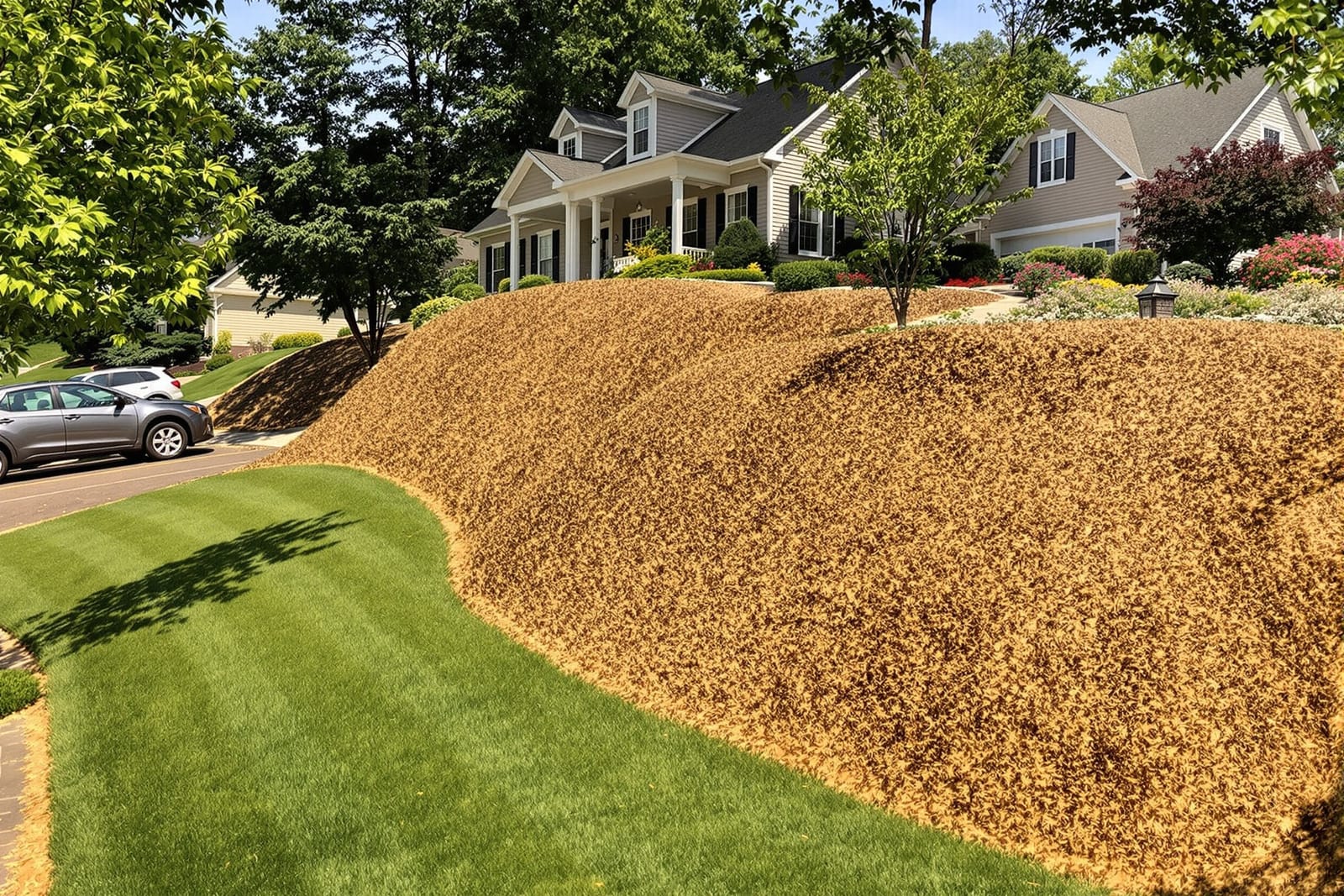
Our residential erosion control hydroseeding in Fort Worth, TX stabilizes slopes, banks, and drainage areas around your home. We use erosion control seed mixes and mulch to hold soil in place and encourage dense root growth. Protect your property from washouts while improving the look of steep or hard to mow areas.
Legendary Hydroseeding Fort Worth provides professional residential erosion control hydroseeding throughout Fort Worth, TX, Texas and the surrounding area. Our licensed, insured crew delivers safe, clean, on-time work with a free estimate before anything begins. Call 682-900-2918 or request your free quote.
Targeted erosion control for slopes and banks in Fort Worth
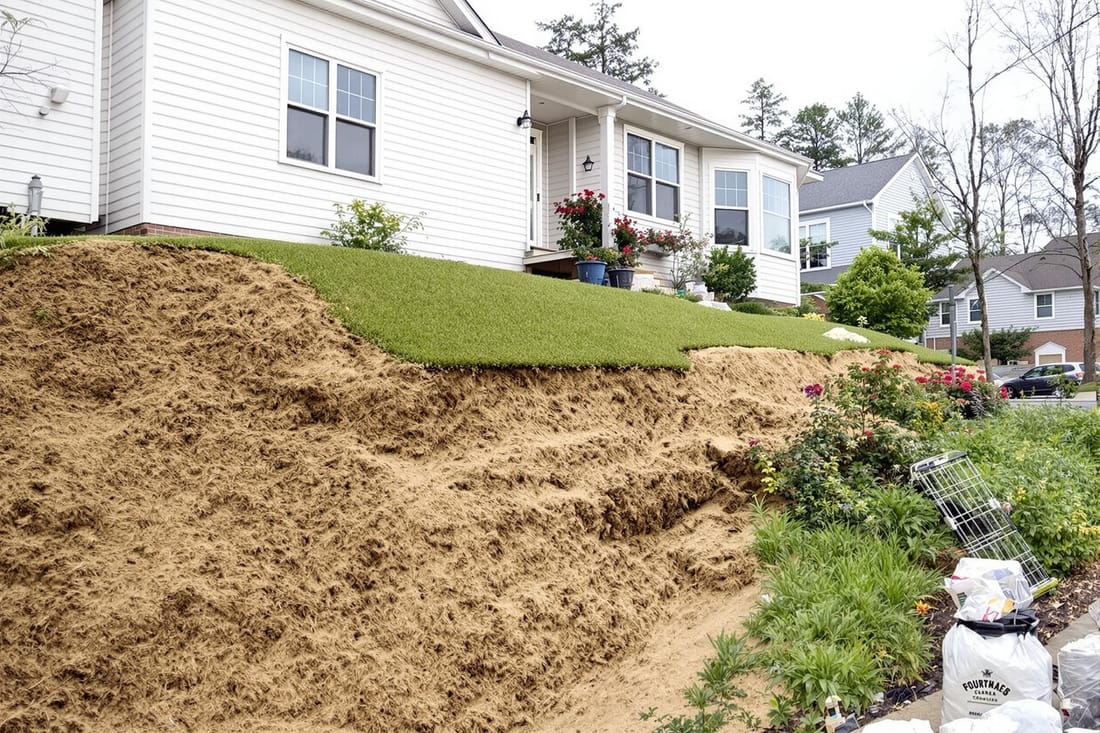
Steep yards, drainage ditches, and creek banks around Fort Worth do not forgive poor erosion control. One heavy Gulf thunderstorm can strip bare soil, undercut fences, and send sediment into your neighbor’s property or the street. Legendary Hydroseeding Fort Worth focuses on residential erosion control hydroseeding that is designed specifically for local clay and sandy loam soils, not a one-size-fits-all mix pulled from another region.
On this service, we are not just spraying grass seed. We design a reinforced vegetative system that works with the slope angle, soil type, and water flow on your property. That often means a different plan for the upper slope, mid-slope, and toe of the bank. Our crews walk the site, look at existing drainage paths, downspout outlets, and low spots, and then specify a hydroseeding slurry and layout that will actually hold during a North Texas downpour, not just look green on day one.
Residential erosion control hydroseeding is ideal for new construction lots, regraded backyards, culvert and swale banks, and around retaining walls where bare dirt is exposed. Compared with rock or concrete, it is lighter, easier to maintain, and in many cases more effective at holding soil once roots knit the slope together.
How residential erosion control hydroseeding actually works on slopes
Slope and bank erosion control hydroseeding uses a pressurized tank to spray a blended slurry across the slope. For Fort Worth conditions, this slurry usually includes a custom grass seed mix, water, wood or paper mulch, a tackifier adhesive, fertilizer, and sometimes soil conditioners if the clay is especially tight. Everything is applied in one pass so the seeds, mulch, and binder lock together on the soil surface.
On steep or highly erodible slopes we often use a two-pass system. The first coat is a heavier tackified mulch that creates a protective blanket and fills small rills. Once that has set up, a second pass adds more mulch and seed where needed. In some drainage channels and around culvert inlets, we blend in a higher percentage of deep-rooting species to anchor the soil where flows are strongest.
Coverage rates matter. For a typical Fort Worth backyard slope of 3:1 (3 feet horizontal to 1 foot vertical), we apply significantly more mulch per 1,000 square feet than we would on a flat lawn. That extra fiber and tackifier is what keeps the slurry from sliding during the first few storms. We also adjust nozzle choice and spray angle so material lands gently and does not bounce or run.
Within a few days, the tackifier cures and the mulch forms a crust that sheds raindrop impact but still lets water seep through. As the grass germinates and roots penetrate 2 to 4 inches into the soil, the slope becomes increasingly stable. Over time, the living root mass becomes the primary erosion defense and the mulch breaks down into organic matter.
Materials and plant choices that perform in Fort Worth
Legendary Hydroseeding Fort Worth does not use a stock seed mix for every bank. Fort Worth has hot, dry summers, occasional deep freezes, and heavy convective storms. We select grasses and cover species that can handle all three. For sun-exposed slopes we often use blends of Bermuda, buffalo, and native prairie grasses along with quick-germinating nurse species such as annual rye in cooler seasons. For partially shaded creek banks we may specify more fescue and shade-tolerant natives so coverage stays thick where the sun is limited.
Mulch type and rate are also tailored. On modest slopes and protected areas, a high quality paper mulch can be sufficient, which helps control cost. On critical slopes, roadside banks, or areas that see concentrated runoff, we upgrade to wood fiber or a blended mulch with a higher fiber length and stronger binding. When necessary, we add a premium bonding agent that significantly increases resistance to sheet flow.
Some banks need more than vegetation alone. Where we see active gullying, very steep faces, or water that must be directed in a specific path, we may recommend combining hydroseeding with erosion control blankets, turf reinforcement mats, or small rock checks at the base of the slope. The hydroseeding ties into these structures to create a continuous system. We also consider mowing requirements and long-term maintenance so the plant selection and layout are practical for a homeowner to live with year after year.
Step-by-step process for stabilizing your slope or bank
A typical residential erosion control hydroseeding project in Fort Worth follows a clear sequence so there are no surprises.
1) Site evaluation: We visit the property, map the slope angles, identify where water currently enters and leaves, and note any existing erosion such as rills, undercut edges, or exposed roots. We check soil texture by hand to understand how much it compacts and how fast water will infiltrate.
2) Surface preparation: Before spraying, we grade sharp edges, fill deeper ruts, and remove loose debris. On very slick clays we may lightly roughen the surface so the slurry has something to grip. If there are downspouts or French drains, we verify that discharge is not pointed directly at unprotected soil or we plan for rock energy dissipaters.
3) Mix design and application: Based on the evaluation, we set the seed mix, mulch type, and tackifier rate. The crew then hydraulically applies the slurry from the bottom of the slope upward to avoid disturbing fresh material. We overlap passes so there are no thin strips that become weak points in the first storm.
4) Edge detailing and tie-ins: We pay special attention where the slope meets sidewalks, patios, fences, and existing turf. Clean edges and good overlap prevent undermining. Where there is existing grass, we feather the hydroseed into it so water does not find a seam to exploit.
5) Post-application review and watering plan: Once application is complete, we walk the site with you, point out any critical flow paths, and give a specific watering and traffic plan tailored to the season and your irrigation system. You leave knowing exactly what to do for the next 4 to 8 weeks.
6) Follow up and adjustments: If a rare extreme storm carves a small channel before full establishment, we can spot repair with additional hydroseed or small structural controls before the damage spreads.
Costs, timing, and what affects your price
Homeowners often ask what drives the cost of slope and bank erosion control hydroseeding. The three biggest factors are total square footage, slope severity, and material choices. A gentle backyard slope behind a new home with good access, using a standard mulch and seed blend, will sit at the lower end of the range. A tall creek bank with limited access, heavy wood fiber mulch, premium binders, and integrated blankets will cost more per square foot because we are using more material and more labor per area.
Slope steepness matters because it dictates mulch rate and sometimes extra safety measures for the crew. As slopes approach 2:1 and steeper, we increase mulch depth and tackifier, which directly affects material cost. Sites with poor access that require extra hose length, hand-carrying equipment, or working around fences and landscaping also increase labor hours.
Season plays a role in Fort Worth. The best windows for residential erosion control hydroseeding are typically September through early November and March through May. In fall, soil is still warm and rain is common, which speeds germination. In spring, moisture is available before the extreme summer heat. We can hydroseed outside these windows, but we may adjust seed choices and watering expectations. Scheduling in the prime seasons usually reduces risk of rework and helps protect your investment.
To keep you in control, Legendary Hydroseeding Fort Worth provides itemized proposals that separate base hydroseeding, optional blankets or mats, and any drainage modifications. That way you can see exactly what you are paying for and where adjustments can be made without compromising erosion control.
What Fort Worth homeowners should know before hiring
Not every green hillside is stable, and not every hydroseeding contractor approaches residential erosion control with the same level of planning. Before you hire anyone, ask what specific seed mix they plan to use on your property and why. If the answer is a generic "contractor blend" without mention of Fort Worth soil or climate, be cautious. You should also ask what mulch type and application rate they recommend and how that changes with slope angle.
Check whether they address drainage as part of the project. If your gutters dump straight onto a bare slope, no amount of seed will fix the underlying issue. At Legendary Hydroseeding Fort Worth, we routinely suggest simple drainage improvements such as splash blocks, rock aprons at outlets, or minor grading adjustments to redirect concentrated flow into stable areas.
You should also understand that erosion control is a shared responsibility. The contractor designs and installs the system, but early watering and traffic control are in your hands. Walking on a freshly hydroseeded bank or driving equipment over it can create channels that defeat the whole purpose. We provide clear instructions, but it is important that everyone in the household, and any other contractors on site, respect the protected area until roots are established.
Finally, recognize that a living erosion control system improves with time. The first few weeks are about getting a uniform stand of grass. Over the first year, root depth and density increase, the soil structure improves, and the slope or bank becomes more resilient to storm events. A thoughtful fertilizer and mowing plan, which we can outline for you, will help that process and protect both your yard and neighboring properties.