Home › Stormwater Swale and Rain Garden Hydroseeding
Our swale hydroseeding services in Fort Worth, TX stabilize drainage ditches and rain garden areas around your home. We use moisture tolerant seed mixes to slow runoff, filter water, and prevent erosion. Improve both function and appearance of your stormwater features with professional hydroseeding.
Legendary Hydroseeding Fort Worth provides professional swale hydroseeding throughout Fort Worth, TX, Texas and the surrounding area. Our licensed, insured crew delivers safe, clean, on-time work with a free estimate before anything begins. Call 682-900-2918 or request your free quote.
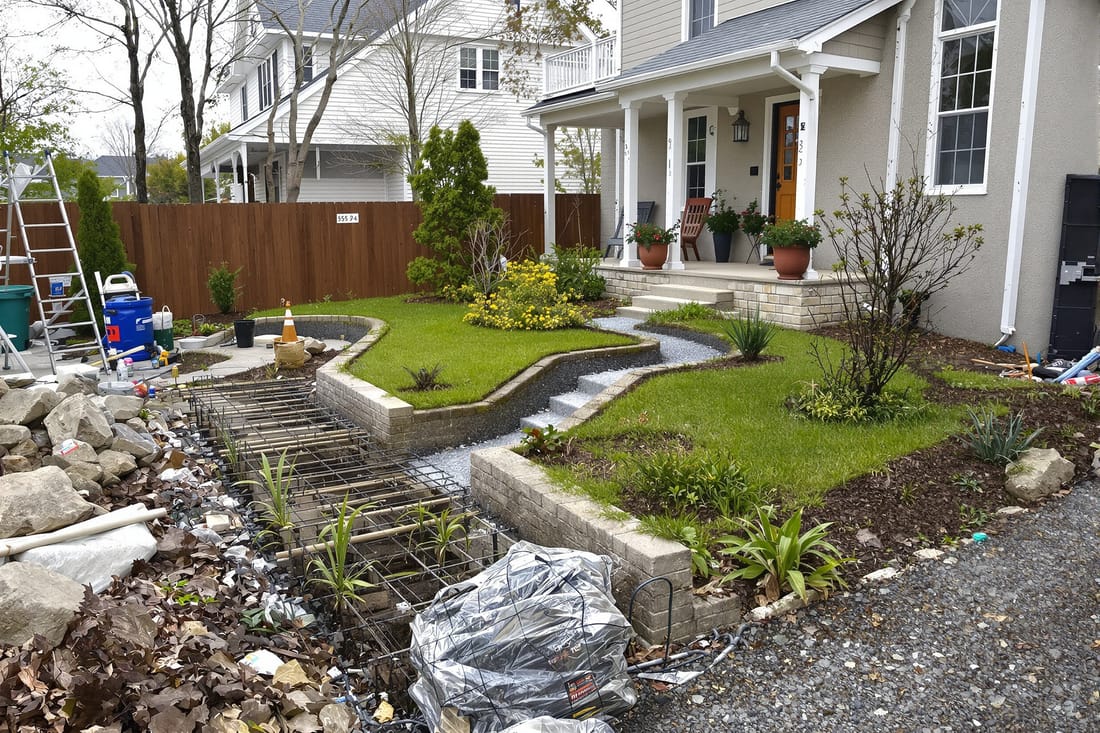
Stormwater Swale & Rain Garden Hydroseeding in Fort Worth
Stormwater swales and rain gardens are only as good as the vegetation that holds them together. In Fort Worth, a heavy summer storm can tear up bare soil in a single afternoon. At Legendary Hydroseeding Fort Worth, we use swale hydroseeding to get a dense, rooted cover established quickly so the swale or rain garden can actually move and filter water the way it was designed.
Hydroseeding is a sprayed-on mix of seed, mulch, fertilizer, water, and soil stabilizers. For swales and rain gardens, we tune that mix to match North Texas clay soils, steep or shallow side slopes, and the kind of stormwater flow you expect. The goal is simple: fast germination, deep roots, and a thick stand of plants that will not wash out the first time a thunderstorm rolls across Tarrant County.
We work on new construction drainage swales, retrofit projects where erosion is already a problem, and residential rain gardens that are meant to take roof or driveway runoff. Our crews handle small backyard bioswales as well as long commercial or roadside swales, and we adjust our approach to fit both the site and your local stormwater requirements.
How Swale Hydroseeding Works, Step by Step
A good swale hydroseeding job starts with dirt work, not the hose. We first walk the swale or rain garden layout with you, verify the high and low points, and check that the water has a clear path to enter and exit. If needed, we recommend grading touchups so you do not end up with unintended standing water or water jumping the bank in a big storm.
Next, we look at the soil. Fort Worth soils are often heavy black clay or caliche. If the top few inches are compacted, water will just sheet off and carry seed with it. We will usually recommend at least light scarifying or raking on the side slopes and at the flow line. In some rain gardens, we suggest importing a shallow layer of compost or a sand/compost blend to help roots penetrate and improve infiltration.
Once the soil is prepped, we design the seed mix. For swale bottoms that see regular flow, we lean on deep rooted grasses and native mixes that can take periodic inundation, such as blends of bermudagrass, buffalo, or appropriate native bunchgrasses, sometimes combined with erosion control annuals that come up fast and hold soil while the permanent plants establish. On side slopes and rain garden berms, we may add wildflowers or low shrubs where it makes sense, always checking they can survive our hot, dry stretches between storms.
We then load the hydroseeder tank with water, fiber mulch, seed, starter fertilizer, tackifier, and any soil amendments that make sense for your site. For steeper swales or areas with concentrated flow, we increase the mulch rate and the tackifier to create a thicker protective mat that locks seed to the soil. The mix is sprayed evenly over the entire swale or rain garden, including inlets, outlets, and transition areas, so there are no weak spots where erosion can start.
Plant Choices, Local Conditions, and Design Details
The plants in a Fort Worth swale or rain garden have to survive two extremes, intense heat and drought between rain events, then fast moving stormwater when it does rain. That is why Legendary Hydroseeding Fort Worth focuses on regionally appropriate species instead of generic mixes from out of state.
In many residential and light commercial swales, clients choose a turf-style look in the bottom, such as common bermuda or a water-tolerant blend, so the swale can be mowed like the rest of the lawn. Where city or HOA rules allow, we can use native prairie grasses in the side slopes that grow taller, need less irrigation, and provide better wildlife and pollinator habitat around rain gardens.
For true bioretention or rain garden cells, plant selection gets more specific. The center of the rain garden might receive long soaking periods, so we specify species that can handle wet feet for a day or two, while the upper edges get drought-tolerant species. Hydroseeding can establish many of these grasses and forbs quickly across the whole basin, then shrubs or accent plants can be added by hand afterward. This approach keeps costs down and ensures full coverage in areas that are critical for erosion control.
We also pay attention to flow concentration points. If your swale has curb cuts, pipe outfalls, or driveway crossings, we may recommend rock energy dissipation, erosion control blankets, or reinforced turf areas combined with hydromulch. These details are what keep a nicely hydroseeded swale from failing at the first big inflow point.
Costs, Common Problems, and How We Prevent Washouts
Swale hydroseeding is usually more cost effective than sodding a long drainage channel, but costs still depend on several real factors: square footage, slope, soil condition, and the complexity of the seed mix. A straight, gently sloped roadside swale with minimal prep will be on the lower end. A deeply cut backyard swale with clay that needs amendment, or a multi-basin rain garden system with inlet and outlet protection, will cost more because we need heavier mulch rates, more tackifier, and more time on soil prep.
One of the most common problems we see in Fort Worth is seed and mulch washing out before it has time to root. This usually happens when swales are hydroseeded right before a large storm without added protection, or when a contractor uses a light mulch rate that is fine for flat lawns but not for a channel. We counter this by watching the forecast, recommending temporary diversion where possible, and, if you need the job done in a risky weather window, using heavier mulch blankets or adding straw matting in the most vulnerable stretches.
Another frequent issue is improper mowing or maintenance in the first season. Swale and rain garden vegetation needs time to establish roots. We clearly mark and explain a no-mow period, then a higher first mowing height so you do not scalp young plants. We also outline a simple watering plan. In Fort Worth summers, even drought tolerant mixes need irrigation to get started, especially if the site will not receive regular stormwater for a few weeks.
We are up front about where you can save and where cutting corners backfires. For instance, you might skip full topsoil replacement by doing targeted compost incorporation only in problem zones. On the other hand, skimping on mulch or tackifier in the swale bottom almost always leads to bare spots and future erosion repair costs.
What Fort Worth Property Owners Should Know Before Hiring
Before you hire anyone for stormwater swale or rain garden hydroseeding, it helps to have a clear idea of the function you expect from the system. Do you simply want to move water off the property without ruts, or do you want infiltration, water quality improvement, and a landscape feature that looks intentional? When Legendary Hydroseeding Fort Worth walks your site, we ask these questions first so the vegetation plan matches your goals and any city drainage requirements.
Check whether your swale is part of a permitted development or subject to city or HOA rules. Some Fort Worth neighborhoods have specific expectations about grass height, plant types, or how close taller vegetation can be to property lines and sidewalks. We can tailor the hydroseed mix to meet these appearance expectations while still delivering the erosion control and stormwater performance you need.
It is also important to look at how upstream and downstream conditions affect your project. If your neighbor's runoff is concentrating at one spot or if a street inlet is undersized, the swale will see higher flows than the plan might show on paper. Because we work across Tarrant and nearby counties, we are familiar with local drainage patterns and can suggest practical reinforcements, like reinforced flow lines or rock checks, where real-world storms tend to push the design.
Finally, expect some involvement after we hydroseed. Swale hydroseeding is not a set-it-and-forget-it service. The first 60 to 90 days are critical. We provide a simple written care guide that covers watering, traffic control, and early weed management. If you want, we can schedule follow-up visits to review germination and recommend touch-up seeding or spot repairs. That partnership mindset is what keeps your swale or rain garden working for years instead of washing out in the first storm season.